

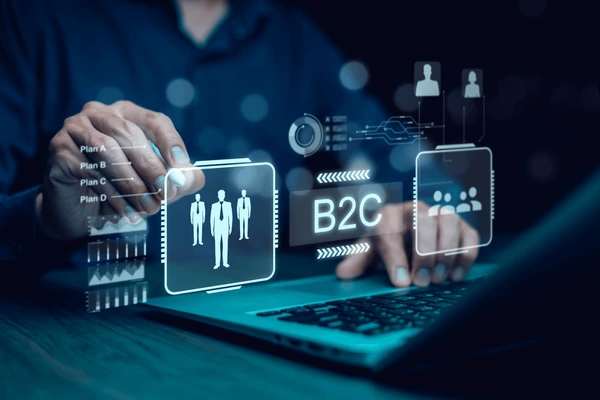
Data licensing shapes modern business operations by enabling companies to leverage valuable information for strategic decision-making. This practice involves acquiring rights to use specific datasets for business purposes, ranging from market analysis to customer targeting.
B2B and B2C data licensing represent two distinct approaches to data acquisition and usage:
B2B focuses on company-specific information, including:
- Industry demographics
- Decision-maker contacts
- Company financials
- Purchase histories
B2C centers on individual consumer information:
- Personal preferences
- Shopping behaviors
- Demographic details
- Lifestyle indicators
Understanding these differences helps you select the right data licensing strategy for your target market and business objectives. For instance, leveraging telemarketing list leads can provide valuable insights into potential customers, while building your own lists and audiences can significantly enhance your digital advertising efforts.
Understanding B2B and B2C Data Licensing Models
Data licensing strategies differ significantly between B2B and B2C markets, each requiring unique approaches to data collection, processing, and distribution. Let’s examine the fundamental characteristics that shape these distinct models.
Target Audience Differences
B2B Data Licensing: Focused on Specific Industries
B2B data licensing focuses on highly specific industry segments:
- Industry Verticals: Data packages tailored for specific sectors like healthcare, finance, or manufacturing
- Company Size Brackets: Enterprise, mid-market, or small business segmentation
- Geographic Territories: Regional, national, or international business coverage
- Decision-Maker Roles: C-suite executives, department heads, or procurement specialists
B2C Data Licensing: Broadly Targeting Consumers
B2C data licensing casts a wider net:
- Demographic Groups: Age, income, lifestyle preferences
- Consumer Behaviors: Shopping patterns, brand preferences, purchase history
- Geographic Areas: Residential neighborhoods, metropolitan areas, postal codes
- Interest Categories: Hobbies, entertainment choices, product preferences
These audience differences create distinct implications for data collection methods:
Implications for B2B Data Collection
The specific nature of B2B audiences necessitates tailored data collection approaches such as:
- Deep-dive company profiling
- Industry-specific metrics tracking
- Professional networking data
- Business credit information
- Corporate hierarchy mapping
Implications for B2C Data Collection
Conversely, B2C audiences require broader yet still targeted methods including:
- Social media behavior analysis
- Purchase history tracking
- Website browsing patterns
- Personal preference surveys
- Location-based data
Processing Requirements Based on Audience Type
The processing requirements also vary significantly based on whether the data is intended for B2B or B2C purposes:
Processing Needs for B2B
Given the complexity often involved in business relationships, processing needs may include:
- Complex relationship mapping
- Account hierarchies
- Multi-stakeholder tracking
- Industry compliance verification
- Business validation checks
Processing Needs for B2C
On the other hand, with individual consumers being the focus in most cases here:
- High-volume data handling becomes crucial due to large numbers of individual records typically processed.
- Real-time preference updates are necessary as consumer interests can change rapidly.
- Individual privacy protection must be prioritized ensuring compliance with regulations like GDPR.
- Cross-device tracking is often required understanding how consumers interact with brands across different devices.
- Behavioral pattern analysis helps identify trends in consumer behavior.
Scale and Scope Reflected in Processing Requirements
The scale and scope of data processing reflect these differences directly:
Typical Processing Needs for B2B
For businesses dealing primarily with other businesses (B2Bs), their processes usually involve:
- Detailed company profiles creation containing information about each organization they work with.
- Extended historical records maintenance keeping track of past interactions and transactions.
- Multiple contact points identification knowing who within an organization should be reached out to.
- Decision-maker tracking understanding who has the final say in purchasing decisions.
- Industry-specific metrics measurement assessing performance based on criteria relevant to particular industries.
Typical Processing Needs for B2C
In contrast when it comes down to businesses selling directly to consumers (B2Cs), their requirements generally consist of:
- Individual consumer profiles development gathering information about each customer.
- Recent activity patterns monitoring analyzing what actions customers have taken recently.
- Single-user tracking following how one particular user behaves over time.
- Personal preferences understanding what each individual likes or dislikes.
- General demographic info collecting basic details such as age or gender about customers.
By recognizing these differences between both models—target audience characteristics and corresponding implications—it becomes easier to devise effective strategies tailored specifically towards either type.
Transaction Complexity Variations
B2B data licensing transactions involve intricate decision-making processes and multiple stakeholders. A typical B2B data licensing deal requires:
- Extended negotiation periods (3-6 months average)
- Custom contract terms
- Multiple approval levels
- Technical integration discussions
- Compliance reviews
The complexity stems from specific business requirements, data volume considerations, and integration needs. For example, a manufacturing company licensing supplier data might need custom APIs, specific data formats, and specialized usage rights.
B2C data licensing transactions follow a different path:
- Quick purchase decisions (24-48 hours)
- Standardized terms
- Single-step approval
- Pre-packaged solutions
- Fixed pricing models
You’ll find B2C transactions streamlined through self-service platforms. A marketing agency buying consumer email lists can complete the purchase through automated systems with instant delivery.
The sales cycle differences impact pricing structures and delivery methods:
B2B Pricing & Delivery
- Volume-based tiers
- Custom payment terms
- Phased implementation
- Dedicated support
B2C Pricing & Delivery
- Fixed rate cards
- Immediate payment
- Instant access
- Automated support
These transaction patterns shape how data providers structure their offerings and support systems, creating distinct operational models for each market segment.
Customer Lifetime Value Considerations
Customer Lifetime Value (CLV) calculations differ significantly between B2B and B2C data licensing models. B2B relationships typically yield higher CLV due to substantial, recurring investments in data solutions and long-term partnerships.
B2B CLV Considerations
A B2B data licensing client might spend $50,000-$100,000 annually on specialized industry data, creating a potential CLV of millions over a decade-long relationship. These high-value partnerships require:
- Dedicated account management teams
- Customized data solutions
- Regular strategy meetings
- Ongoing technical support
- Quarterly business reviews
B2C CLV Considerations
B2C data licensing focuses on volume and frequency of smaller transactions. The average B2C customer might spend $50-$500 per purchase, with CLV ranging from $1,000-$5,000. B2C strategies prioritize:
- Quick conversion rates
- Streamlined purchase processes
- Automated customer support
- Regular promotional offers
- Loyalty programs
Investment Differences in Customer Relationships
The investment in customer relationships reflects these CLV differences. B2B data providers allocate significant resources to maintain individual client relationships, while B2C providers optimize their systems for efficient handling of numerous smaller accounts.
Data licensing companies like Multimedia Lists demonstrate this distinction through their service models – offering personalized consultations for B2B clients while maintaining automated systems for B2C transactions.
Marketing Strategies for Different Licensing Models
Marketing strategies in data licensing require distinct approaches based on whether you’re operating in B2B or B2C spaces. The fundamental differences in audience needs, buying behaviors, and decision-making processes shape how data products are marketed and sold.
Marketing Approaches
B2B Marketing Approaches
- Account-based marketing (ABM) strategies target specific companies
- Data-driven lead scoring systems identify high-potential business prospects
- Industry-specific case studies demonstrate ROI and business impact
- Technical documentation and integration guides support sales efforts
- Professional networking events and industry conferences for relationship building
To enhance your B2B marketing outreach, consider utilizing High-Speed B2B Data Appending Services, which include email and address append services ensuring accurate and up-to-date contact information.
B2C Marketing Approaches
- Mass-market advertising campaigns reach broad consumer segments
- Social media engagement builds brand awareness
- Simplified messaging focuses on immediate benefits
- Visual content showcases practical applications
- Quick-response customer service channels
In the realm of B2C marketing, it’s crucial to adopt a more personalized approach. Leveraging consumer data lists in omnichannel marketing can significantly enhance your marketing strategy. This allows for a more targeted approach, reaching consumers where they are most likely to engage.
Data Analytics Integration
B2B marketing strategies rely heavily on predictive analytics to:
- Identify potential client companies
- Track engagement across multiple touchpoints
- Measure campaign effectiveness
- Optimize sales funnel performance
- Calculate customer acquisition costs
B2C marketing leverages real-time analytics for:
- Consumer behavior tracking
- Purchase pattern analysis
- Demographic targeting
- Campaign performance optimization
- Social media sentiment analysis
Marketing Personalization Techniques
B2B personalization focuses on:
- Industry-specific pain points
- Company size and revenue considerations
- Decision-maker roles and responsibilities
- Implementation requirements
- Compliance needs
On the other hand, B2C personalization emphasizes:
- Individual preferences
- Shopping history
- Lifestyle choices
- Geographic location
- Personal interests
Sales Cycle Adaptation
B2B marketing strategies accommodate longer sales cycles through:
- Multi-touch nurture campaigns
- Educational content series
- Regular check-ins and updates
- ROI calculators and tools
- Custom product demonstrations
Conversely, B2C marketing strategies support quick decisions with:
- Limited-time offers
- Easy comparison tools
- Streamlined checkout processes
- Mobile-friendly platforms
- Instant gratification messaging
The success of data licensing marketing strategies depends on understanding these fundamental differences and adapting your approach accordingly.
Your marketing tactics should align with the specific needs, expectations, and buying behaviors of your target market segment.
Additionally, adopting a precision loop strategy that revolutionizes digital marketing with consumer insights can further optimize your B2C strategy by providing deeper insights into consumer behavior and preferences.
Customer Service Approaches for Each Model
B2B and B2C data licensing businesses require distinct customer service strategies to meet their clients’ unique needs.
B2B Customer Service Characteristics:
- Dedicated account managers for personalized support
- 24/7 technical assistance for mission-critical data needs
- Regular check-ins and quarterly business reviews
- Custom training programs for data implementation
- Priority escalation paths for urgent issues
B2C Customer Service Features:
- Self-service portals with automated support
- FAQ sections and knowledge bases
- Chatbot assistance for common queries
- Community forums for peer support
- Standard response times for support tickets
B2B data licensing demands high-touch service models due to complex implementation requirements and substantial contract values. B2C data services prioritize scalability through automated solutions. These systems handle large volumes of standardized requests efficiently, allowing customers to access support resources instantly. The focus remains on creating intuitive interfaces and clear documentation that enables users to resolve common issues independently.
Response time expectations also differ significantly – B2B clients often receive responses within hours, while B2C customers typically work with standard 24-48 hour windows. This difference reflects the varying impact of data accessibility on business operations versus individual use cases.
Effective Pricing Characteristics
B2B Pricing Characteristics:
- Custom pricing packages based on data volume, usage rights, and integration requirements
- Tiered pricing structures reflecting different levels of data access and support
- Annual or multi-year contracts with negotiable terms
- Volume discounts for large-scale data purchases
- API access pricing based on call frequency and data points
B2C Pricing Characteristics:
- Fixed-rate packages with clear feature sets
- Subscription-based models with monthly or annual billing options
- Pay-per-use pricing for specific data queries
- Standardized pricing tiers (Basic, Premium, Enterprise)
- Transparent pricing displayed on websites
B2B data licensing often involves high-value transactions with significant customization. For example, a manufacturing company might require specific industry data with custom fields, leading to a tailored pricing model that accounts for data cleaning, enrichment, and ongoing updates.
For businesses seeking a more efficient solution for their B2B and B2C data needs, platforms like DataWhizz offer low-cost solutions for premium data. DataWhizz is a private label count, order & append system that makes counts, pricing and order fulfillment available anytime and anywhere.
On the other hand, B2C pricing strategies prioritize simplicity and scalability. Consider a weather data provider offering standardized packages to mobile app developers – they typically publish fixed rates based on API calls or user volume, allowing customers to self-select their appropriate tier.
The difference in pricing between these models reflects their inherent value propositions. B2B data licenses command premium prices due to their specialized nature and strategic importance, while B2C offerings balance accessibility with profitability through standardized pricing structures that appeal to a broader market.
Website Design Considerations for Effective Data Licensing Sales
B2B and B2C data licensing websites require distinct design approaches to effectively serve their target audiences.
B2B Website Design Elements:
- Detailed technical documentation
- Comprehensive API integration guides
- Case studies and white papers
- Enterprise-level security certifications
- ROI calculators
- Clear pricing tiers for different usage levels
B2C Website Design Elements:
- Visual data previews
- Simple, intuitive navigation
- Quick-start tutorials
- User-friendly dashboards
- Easy payment processing
- Mobile responsiveness
B2B websites prioritize information depth, featuring extensive documentation and technical specifications. These sites often include dedicated sections for developer resources, integration guides, and detailed use cases. The design focuses on clarity and functionality rather than visual appeal.
On the other hand, B2C data licensing platforms emphasize user experience through:
- Interactive data visualizations
- Step-by-step onboarding processes
- Clear feature comparisons
- Simplified technical explanations
- Prominent customer support options
The navigation structure varies significantly between models. B2B sites implement deep menu hierarchies to organize complex information, while B2C platforms use flat navigation with prominent calls-to-action. B2B designs incorporate lead capture forms throughout the site, focusing on generating qualified prospects. B2C designs streamline the purchase process, minimizing friction points to encourage immediate transactions.
Website analytics tools track different metrics across these models. B2B sites monitor engagement with technical content and white paper downloads. B2C platforms focus on conversion rates and cart abandonment metrics.
Regulatory Compliance Implications for Data Licensing Businesses
Data licensing businesses face distinct compliance requirements based on their operational model. B2B and B2C data providers must navigate different regulatory landscapes to ensure legal and ethical data handling.
B2B Compliance Requirements:
- Industry-specific regulations (HIPAA for healthcare, GLBA for financial)
- Contractual obligations documentation
- Data processing agreements (DPAs)
- Cross-border data transfer protocols
- Audit trail maintenance
For instance, high-speed B2B telemarketing data solutions may come with their own set of compliance requirements that need to be meticulously followed.
B2C Compliance Requirements:
- GDPR and CCPA compliance
- Explicit consent management
- Right to be forgotten protocols
- Privacy policy transparency
- Cookie consent mechanisms
B2B data licensing typically requires robust documentation of data lineage and usage rights. You’ll need to maintain detailed records of data sources, processing activities, and transfer agreements. These requirements intensify when dealing with sensitive industry data or international business partnerships.
B2C data licensing demands stricter consumer privacy protections. Your compliance strategy must include clear consent mechanisms, data deletion processes, and transparent privacy notices. Personal data protection laws like GDPR and CCPA create additional obligations for consumer data handling.
Common Compliance Elements:
- Data security measures
- Breach notification procedures
- Regular compliance audits
- Staff training programs
- Risk assessment protocols
The complexity of compliance requirements often scales with transaction volume and data sensitivity. You’ll need to implement appropriate technical and organizational measures to demonstrate accountability and maintain regulatory compliance in both B2B and B2C contexts.
Emerging Trends Shaping the Future of Data Licensing Strategies
The data licensing landscape is experiencing rapid transformation through innovative technologies and evolving business practices. Here are the key trends reshaping both B2B and B2C data strategies:
1. AI-Powered Data Analytics
- Predictive modeling capabilities enhance data accuracy
- Real-time data processing enables instant decision-making
- Machine learning algorithms improve data cleansing and validation
2. Sustainable Data Practices
- Green data centers reduce environmental impact
- Ethical data collection methods prioritize consumer privacy
- Resource-efficient data storage solutions minimize digital waste
3. Hybrid Data Solutions
- Integration of first-party and third-party data sources
- Custom data marketplaces for specific industry needs
- Cross-platform data synchronization capabilities
The B2B sector embraces AI-driven account-based marketing strategies, while B2C businesses leverage machine learning for hyper-personalization. Both sectors are adopting blockchain technology for enhanced data security and transparency.
Industry-Specific Innovations
- Healthcare: Patient data interoperability solutions
- Finance: Real-time market intelligence platforms
- Retail: IoT-enabled consumer behavior tracking
These emerging trends are pushing data licensing providers to adapt their offerings. B2B providers focus on developing enterprise-grade AI solutions, while B2C providers prioritize scalable personalization tools. The future of data licensing lies in balancing technological advancement with responsible data stewardship.
FAQs (Frequently Asked Questions)
What is data licensing and why is it significant in today's business landscape?
Data licensing refers to the process of obtaining permission to use specific data sets for various business purposes. It is significant in today’s business landscape as companies increasingly rely on data-driven insights to make informed decisions, enhance customer experiences, and drive growth.
What are the key differences between B2B and B2C data licensing models?
The key differences between B2B (business-to-business) and B2C (business-to-consumer) data licensing models include target audience focus, transaction complexity, customer lifetime value considerations, marketing strategies, and customer service approaches. B2B typically targets specific industries with longer sales cycles, while B2C focuses on a broader consumer base with quicker transactions.
How do target audience differences impact data collection methods?
In B2B models, businesses focus on industry-specific companies which necessitates detailed data collection tailored to those sectors. In contrast, B2C targets a wider consumer base requiring more generalized data collection methods aimed at understanding broader consumer behaviors.
What role does customer lifetime value (CLV) play in B2B vs. B2C contexts?
In B2B contexts, CLV emphasizes nurturing long-term relationships due to the complexity and duration of sales cycles. Conversely, in B2C contexts, CLV often focuses on driving repeat purchases through personalized marketing strategies that encourage immediate consumer engagement.
How do marketing strategies differ between B2B and B2C data licensing?
Marketing strategies in B2B often involve targeted account-based marketing using platforms like LinkedIn for relationship building. In contrast, B2C marketing tends to leverage emotional appeal through engaging visuals on social media platforms such as Instagram to attract a larger audience.
What are some emerging trends affecting data licensing strategies?
Emerging trends impacting data licensing strategies include the integration of AI technology for enhanced analytics and decision-making processes, as well as sustainability practices that encourage responsible use of data. These trends are shaping how both B2B and B2C businesses approach their data solutions.